Zrnic
Raymond Larabie / Typodermic Fonts Inc. · Regular · Zrnic
I-preview ang font na ito, tingnan ang detalye ng file, at i-download ang buong package ng designer.
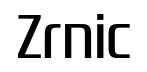
Tungkol sa font na ito
Lisensya / Copyright: Free desktop license — see included Typodermic EULA
Tala ng may-akda:
Official free desktop-license package from Typodermic Fonts Inc.
Included font files: zrnic rg.
Download and retain the complete original ZIP, including read-this.html and the Typodermic Desktop EULA 2026.pdf. The included EULA governs use. This package covers only the listed styles; other styles in the commercial family are not included.
More engineered products are becoming systems rather than single machines. Warehouses run coordinated robot fleets; buildings combine sensors, controls, and digital twins; inspection platforms connect vehicles with interchangeable payloads; construction technology links prefabricated components with robotic assembly. Their identities need to suggest that parts belong to a larger system without falling back on an anonymous geometric sans or an exaggerated sci-fi alphabet.
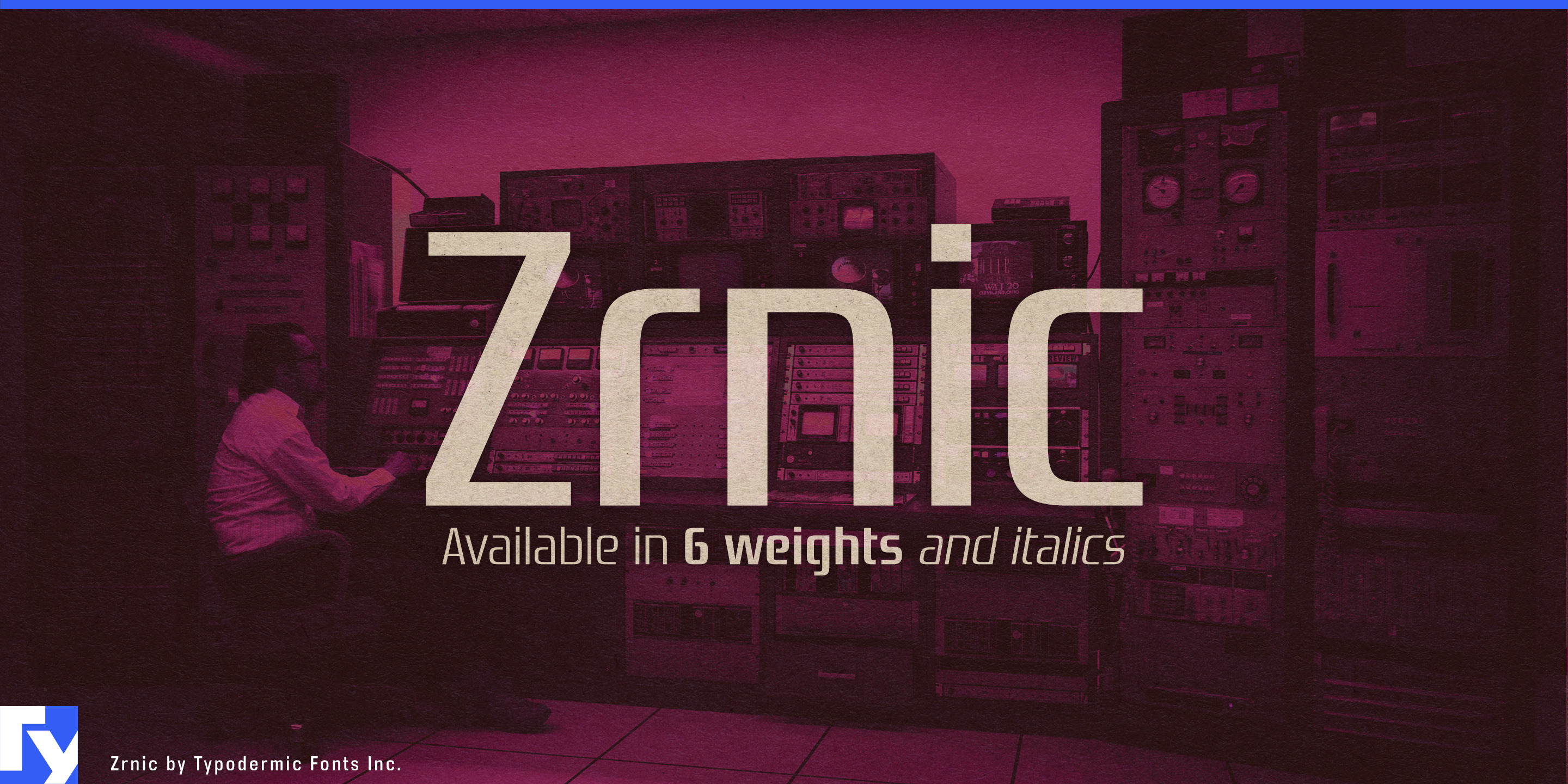
Zrnic approaches that problem through construction. Its rectangular forms are interrupted by strategic openings and clipped joins, giving letters the appearance of components fitted together without completely merging. The result suggests modularity and engineered assembly rather than generic futurism. A genuine lowercase lets that visual language continue through mixed-case platform names and short display copy instead of restricting it to all-caps badges.
Autonomous logistics is a particularly strong fit. Warehouse robots, autonomous forklifts, robotic picking systems, sortation modules, charging stations, and fleet-management platforms all belong to coordinated networks rather than operating as isolated products. Zrnic can handle AMR fleet names, robot-series graphics, warehouse automation platforms, cargo-routing systems, terminal technology, and trade-show displays.
Robotic construction and prefabricated building systems extend the same idea into architecture. Modular housing platforms, automated fabrication cells, façade systems, construction robots, prefabricated component families, and digital assembly technologies need identities that can bridge physical structures with software-controlled processes.
Industrial digital twins create another useful territory. Factory simulation platforms, facility-visualization systems, spatial maintenance tools, BIM-linked operations, and industrial XR products connect software representations to physical equipment. Zrnic can give platform names, visualization titles, module headings, training environments, and technology demonstrations a recognizable engineered character.
Infrastructure inspection systems combine another set of modular technologies: drones, autonomous crawlers, LiDAR units, thermal cameras, sensor pods, and monitoring software. Zrnic can carry drone-series names, payload identifiers, inspection-platform identities, control-center headings, and case-study graphics for bridge inspection, wind-turbine maintenance, solar-farm monitoring, power-line surveying, and pipeline assessment.
Smart-building systems offer a quieter application for the same visual idea. Building automation, connected HVAC, access control, environmental sensors, smart façades, lighting-control platforms, and energy-management systems increasingly operate as interconnected layers. Zrnic can give those product families, control platforms, sensor networks, brochures, and exhibition installations a technical identity that still feels appropriate around contemporary architecture.
Zrnic is most useful when the subject is not simply technology, but technology made from coordinated parts: fleets, modules, sensors, structures, software layers, and physical components working as one system.
Official information and additional styles:
https://typodermicfonts.com/the-born-again-zrnic-font-family/
Ilustrasyon at pagbabahagi



Mga komento ng mambabasa
Magbahagi ng feedback o tala tungkol sa font na ito.
Wala pang komento. Maging una ka.